

Heart rate, heart rate variability, SpO2 monitor
PPG uses photoelectric sensors to detect the difference in reflected light intensity after absorption by human blood and tissues, trace the changes in blood vessel volume during the cardiac cycle, and calculate the heart rate from the obtained pulse waveform. We-Be band is equipped with 4 channels of PPG signals (green*2, IR and red) which offers accurate and stable measurement of the raw PPG signal.
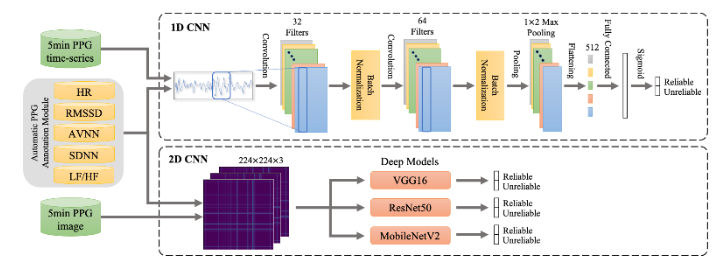
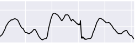
Raw PPG Signal
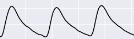
Clean PPG Signal
Electrodermal activity is one of the most sensitive emotional feedbacks, originating from the spontaneous activation of sweat glands in the skin. It is closely related to mood, arousal, and attention, and is the most widely used type of measurement in the physiological response system. At the same time, because of its high stability, simple measurement, and high sensitivity, it has become the most effective and sensitive physiological parameter to reflect changes in individual sympathetic nerve excitability.
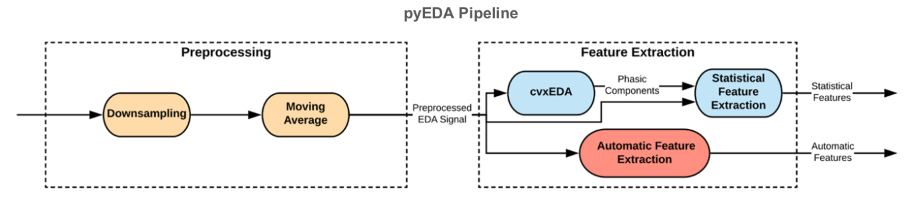

With advanced AI/ML techniques, blood pressure can be measured on We-Be.
Continuous monitoring of BP can help diagnose chronic severe conditions. We-Be platform embedded a deep learning method based on cycle generative adversarial network (CycleGAN) to reconstruct the entire ABP waveform using a PPG signal. On cross-subject evaluation on MIMIC-II dataset, the embedded model achieves prediction error MAE±σ of 2.89±4.52 mmHg and 3.22±4.67 mmHg for SBP and DBP, respectively.
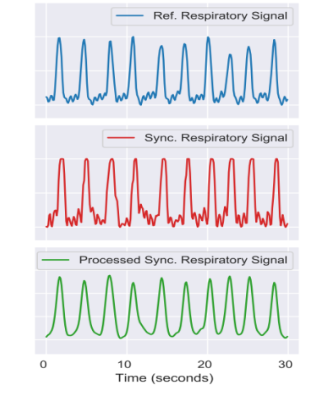
We deployed state-of-the-art PPG-based respiratory rate estimation algorithms.
Respiratory rate is an important vital signs especially during the pandemic. However, it is difficult to measure RR. We-Be platform integrated automatic RR estimation algorithm to extract RR from PPG signal.
We-Be band is equipped with most advanced machine learning-based stress detection model.
Daily life stress has become a significant issue for the modern society and it is ubiquitous. The mismatch between job demands and abilities, time pressure and high workloads, family-related issues, illnesses are all causes of stress. Recent years, researchers have validated that stress can be monitored by physiological signals and machine learning. We-Be integrates these state-of-the art algorithms and provides accurate real-time stress evaluation.